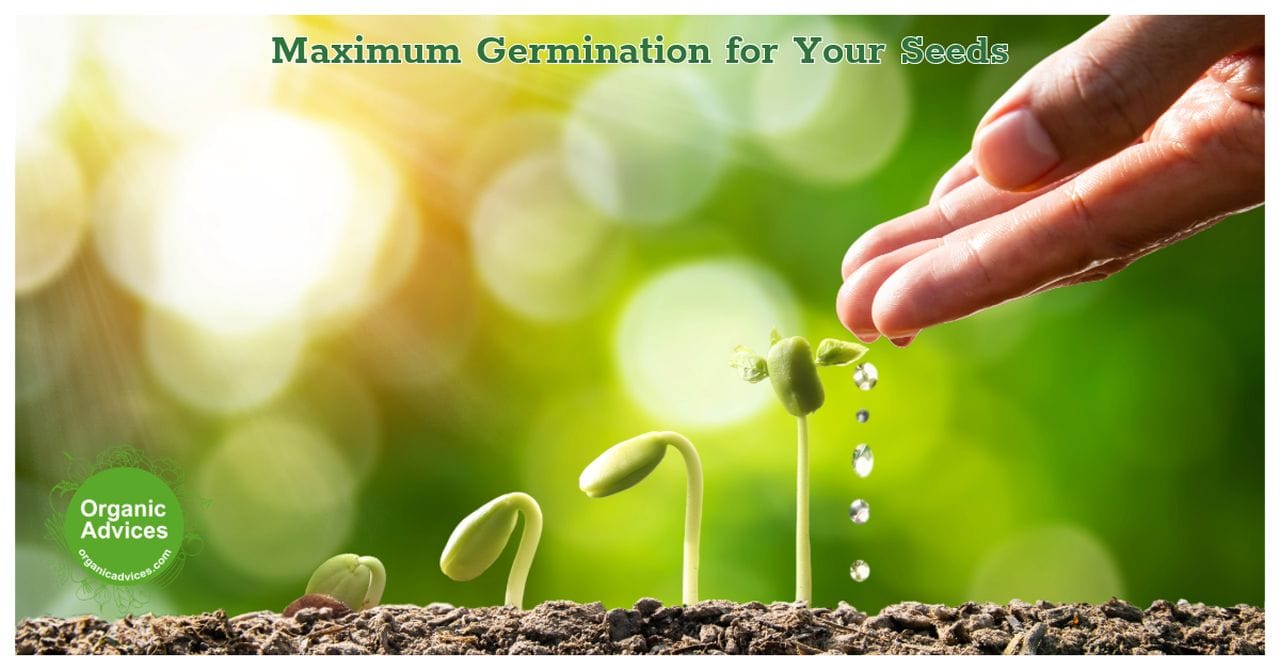

Successful gardening begins with healthy seed germination. Even high-quality vegetable seeds may fail to sprout if they are planted incorrectly or if the growing conditions are unsuitable. Proper seed treatment, a good potting mix, careful watering, and the right temperature can significantly improve germination rates and produce stronger seedlings.
This guide explains simple techniques that help maximize seed germination for vegetable gardens, whether you’re growing plants in seedling trays, paper cups, or grow bags.
🌱 What’s Covered in This Guide
| 🌿 Topic | Description |
|---|---|
| 🌾 Seed Selection | Choosing healthy vegetable seeds |
| 🦠 Seed Treatment | Preparing seeds before sowing |
| 🪴 Potting Mix | Best growing medium for germination |
| 💧 Watering | Proper moisture management |
| ☀️ Temperature & Light | Ideal growing conditions |
| 🎥 Video Guide | Step-by-step seed germination tutorial |
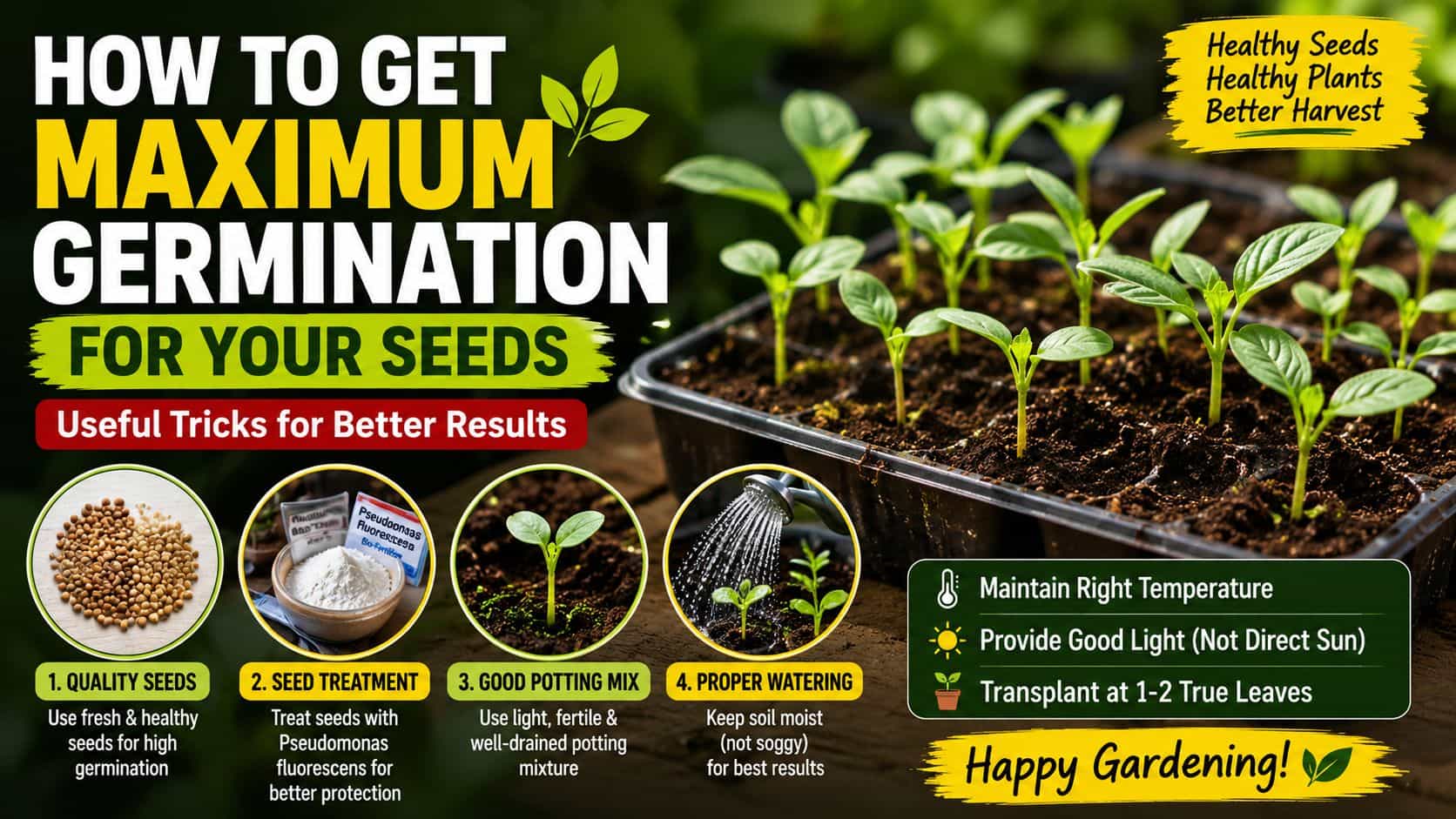
🌾 Start with Quality Seeds
Healthy seedlings begin with quality seeds.
When selecting vegetable seeds:
- 🌱 Purchase from trusted suppliers.
- 📅 Check the packaging or expiry date.
- 🥬 Choose varieties suited to your local climate.
- 📦 Store unused seeds in a cool, dry place.
Fresh, viable seeds generally provide better germination than old or improperly stored seeds.
🦠 Treat Seeds Before Sowing
Seed treatment helps protect young seedlings during the early stages of growth.
One commonly used biological treatment is Pseudomonas fluorescens, a beneficial microorganism that is widely used in agriculture.
Basic Seed Treatment
- Mix the recommended quantity according to the product label.
- Coat or soak the seeds as directed.
- Allow excess solution to drain before sowing.
Always follow the manufacturer’s instructions for preparation and application.
🪴 Prepare a Good Potting Mix
A light, well-drained growing medium encourages faster germination.
A simple potting mix may include:
- 🌱 Garden soil
- 🐄 Well-decomposed cow dung or compost
- 🍂 Organic matter for improved texture
The potting mix should be:
- Loose
- Well-drained
- Free from stones and debris
Avoid adding strong fertilizers during the germination stage, as young roots are sensitive.
🌱 Choosing Seedling Containers
Seeds can be started in various containers, including:
- 🌱 Seedling trays
- 🥤 Paper cups
- 🪴 Small nursery pots
- ♻️ Recycled containers with drainage holes
Good drainage is essential to prevent waterlogging and root diseases.
🌾 Correct Sowing Depth
Plant seeds according to their size.
| 🌱 Seed Type | Recommended Depth |
|---|---|
| Tiny seeds | About ½ inch (or follow packet instructions) |
| Larger seeds | About 1 inch (or follow packet instructions) |
Planting seeds too deeply can delay or reduce germination.
💧 Watering After Sowing
Moisture is essential during germination.
For best results:
- 💧 Water gently using a watering can or fine mist sprayer.
- 🌱 Keep the growing medium consistently moist.
- 🚫 Avoid waterlogging.
- 🌞 Water when the surface begins to dry.
Heavy watering or direct rainfall may displace seeds and reduce germination success.
☀️ Temperature and Light
Most vegetable seeds germinate best under warm conditions.
General recommendations:
- 🌡️ Moderate temperatures encourage healthy germination.
- 🌤️ Keep seed trays in bright, indirect light until seeds sprout.
- ☀️ Avoid intense direct sunlight during the germination stage.
After seedlings emerge, gradually introduce them to more sunlight to encourage strong growth.
🌿 Transplanting Seedlings
Seedlings are usually ready for transplanting once they develop 1–2 sets of true leaves.
When transplanting:
- 🌱 Handle seedlings carefully.
- 🪴 Plant into prepared grow bags, containers, or garden beds.
- 💧 Water immediately after transplanting.
Healthy transplants establish quickly and continue vigorous growth.
🌱 Tips for Better Germination
Simple habits can improve germination success:
- 🌾 Use fresh seeds.
- 🪴 Use a light, well-drained potting mix.
- 💧 Maintain consistent moisture.
- 🌡️ Provide suitable temperatures.
- ☀️ Protect seedlings from harsh sunlight until established.
- 🌿 Keep seed trays clean to reduce disease problems.
🎥 Watch the Video
The accompanying video demonstrates:
- Preparing seeds
- Seed treatment
- Potting mix preparation
- Sowing techniques
- Watering methods
- Transplanting seedlings
Watching the complete guide makes seed starting easier for both beginners and experienced gardeners.
🌿 Related Topics
- Seed Starting
- Vegetable Gardening
- Organic Gardening
- Potting Mix Preparation
- Grow Bag Gardening
- Seedling Care
- Terrace Gardening
- Home Vegetable Garden
❓ Frequently Asked Questions
Why are my vegetable seeds not germinating?
Common causes include old seeds, incorrect sowing depth, poor-quality potting mix, overwatering, underwatering, or unsuitable temperatures.
Can I use ordinary garden soil?
Garden soil can be used if it is loose, well-drained, and mixed with organic matter to improve texture.
Should I fertilize seeds immediately after sowing?
No. Seeds contain enough stored nutrients for germination. Strong fertilizers are generally unnecessary during the initial germination stage.
When should seedlings be moved to grow bags?
Most seedlings are ready for transplanting after developing 1–2 sets of true leaves.
Is direct sunlight necessary during germination?
Most vegetable seeds germinate best in bright conditions without intense direct sunlight. After germination, seedlings gradually require more sunlight for healthy growth.